Halloween is one of the most fun (and chaotic) nights of the year — full of costumes, candy, and decorations. But while we’re enjoying the spooky festivities, it’s important to remember that this holiday can actually be pretty frightening — and even dangerous — for our pets.
Here’s how to keep your furry friends safe, calm, and healthy this Halloween.
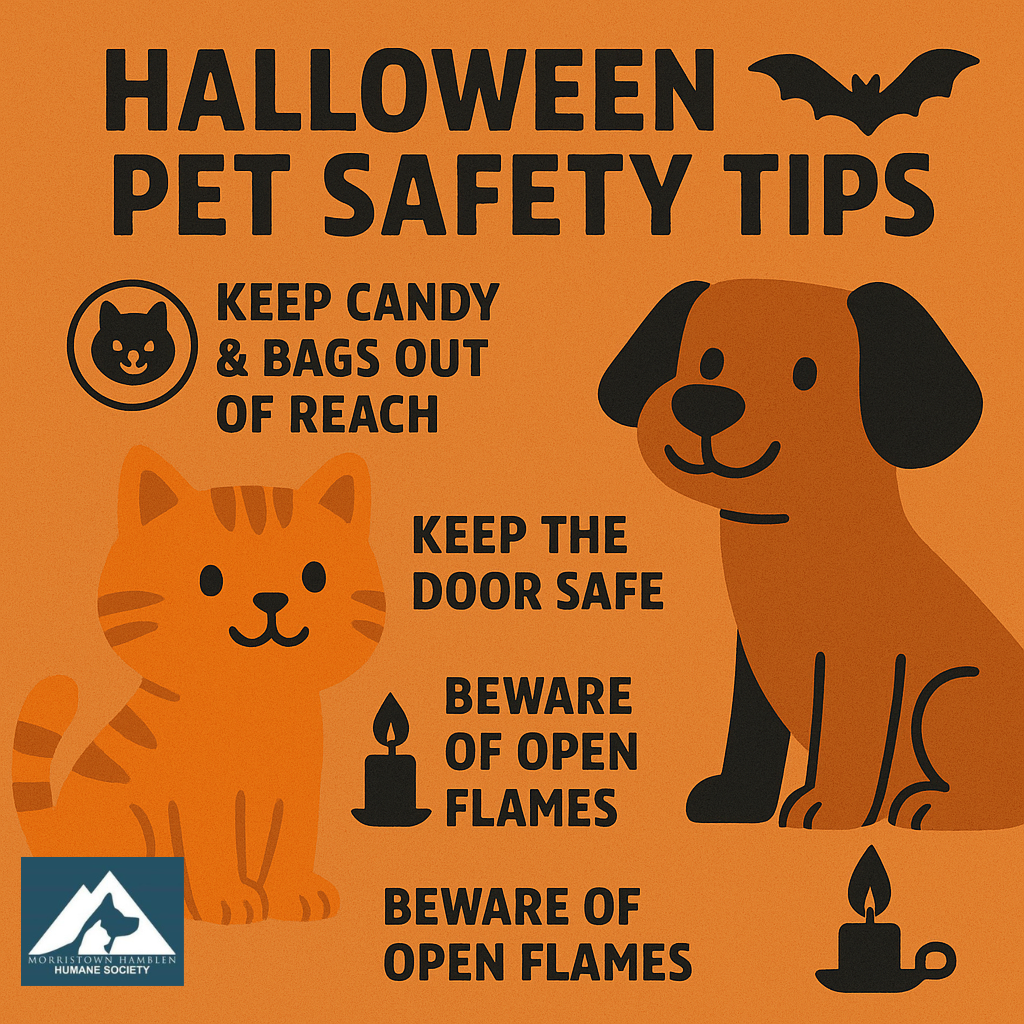
🍬 1. Keep Candy and Candy Bags Out of Reach
Chocolate is toxic to dogs and cats — and the darker it is, the more dangerous. Sugar-free candies that contain xylitol are also extremely poisonous and can cause serious, even life-threatening, reactions.
Even if your pet isn’t sneaking a treat, plastic or foil candy wrappers can cause choking or blockages if swallowed. And candy bags can be a hidden suffocation risk — curious pets may stick their heads inside, cutting off their air supply.
Keep all candy, wrappers, and treat bags completely out of reach, and make sure kids know not to share sweets with their four-legged siblings.
🕸️ 2. Be Mindful of Decorations
Halloween decorations can be fascinating to pets — but also hazardous. Wires from string lights and inflatables are tempting chew toys that can result in electric shock. Fake spider webs, plastic skeleton pieces, or tiny decorations can cause intestinal blockages if ingested.
Even “safe” décor like pumpkins and corn cobs can cause stomach upset when eaten in large quantities. If you’re lighting jack-o’-lanterns, use battery-operated candles instead of real flames to avoid accidents with wagging tails or curious whiskers.
For more pet safety info on toxic foods and items, check out the ASPCA’s list of household hazards.
👻 3. Costumes: Cute or Concerning?
A dog in a dinosaur outfit is adorable — but not every pet agrees. Before dressing up your cat or dog, check that the costume:
- Fits comfortably without restricting movement, hearing, or breathing
- Doesn’t have small parts that can be chewed or swallowed
- Allows easy access to use the bathroom
- Doesn’t cause stress or anxiety
If your pet seems uncomfortable or panicked, skip the costume and opt for a festive collar or bandana instead.
🚪 4. Keep the Door Safe and Secure
Constant doorbell rings and strangers in masks can make pets nervous or protective. Even the friendliest dog or cat may behave unpredictably around costumed visitors.
During trick-or-treat hours, keep your pets in a quiet room away from the door with toys, soft music, or treats. And make sure your pet’s microchip information is up to date and that they’re wearing a visible ID tag — just in case they slip out when the door opens.
💀 5. Avoid Glow Sticks and Fake Cobwebs
Glow sticks and jewelry might look fun, but they contain chemicals that can irritate your pet’s mouth and cause drooling or vomiting if chewed. Similarly, fake cobwebs can become tangled around paws, whiskers, or even pose a strangulation risk for curious cats.
Keep all glow-in-the-dark items and stretchy decorations far out of reach.
🐕 6. Create a Calm, Safe Space
If your neighborhood goes all out with spooky lights, loud noises, or fireworks, consider setting up a safe retreat for your pet.
- Turn on a TV or white noise machine
- Close curtains to block flashing lights
- Provide their favorite bed, toys, and water
Some pets may benefit from calming aids — you can ask your vet about anxiety vests, pheromone diffusers, or natural calming supplements.
🌙 7. Keep Walks Safe After Dark
If you’re taking your dog out for an evening walk on Halloween night, use reflective collars and leashes, or clip-on LED lights so drivers and trick-or-treaters can see you. Crowds, kids in costumes, and decorations can spook pets, so keep them close and avoid overly busy streets.
❤️ A Final Word
Halloween is all about fun — and with a little planning, your pets can enjoy it safely too. Keep an eye on candy, decorations, and costumes, and make sure your furry friends have a calm space to relax. A few precautions can prevent a real Halloween nightmare.
For more tips and emergency info, visit: